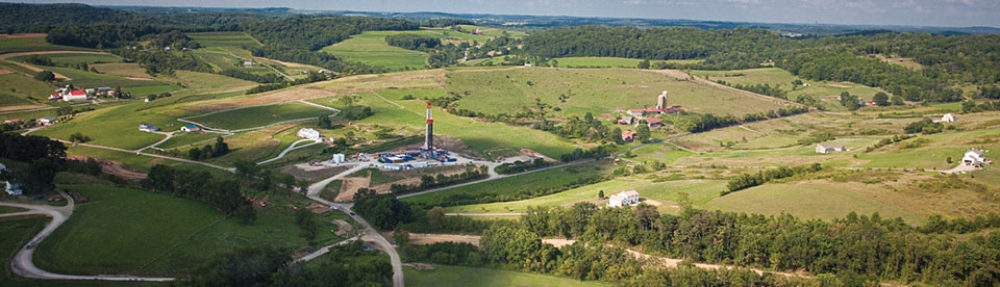
The State of Oil and Gas: May 1, 2017

The EIA expects natural gas to produce more electricity this summer by way of burning natural gas than by any other means.

North Sea oil output is expected to begin to fall in 2018.  This is probably one of those factors that the Saudis have been saying would happen because of decreased capital expenditures in traditional oil drilling project.

Iran is ready to join OPEC’s production cut.  This news ought to drive oil prices up.  Iran had previously expressed interest in producing well over 4 million barrels per day, but has not reached that point.  Perhaps Iran has more infrastructure issues than it had previously realized, and is willing to take a higher price for its oil in exchange for a larger share of the market.

Speaking of production cuts, Russia reduced its daily oil production by 1.6% by mid-April.

The scuttlebutt is that OPEC will extend production cuts and even cut more in an effort to offset U.S. production increases.

Citi expects OPEC to extend production cuts and predicts that consequently oil prices will push $65/bbl by the end of the year.

The U.S. Geological Survey has “discovered” the latest largest continuous natural gas deposit in the country.  It stretches across Texas and Louisiana.  It includes the Haynesville and Bossier shale formations.  The word discovered is in quotes above because this reserve was already known, it’s just that new technologies have made a lot more of it recoverable.  It’s also just the most recent; as continued exploration and technological innovation occur, others will be “found”.  Not meaning to downplay it–it’s still an awful lot of natural gas.  Here’s to being energy independent!

Energy demand will grow in 2017, but not as much as it has previously.  That will probably keep the price of oil down a bit.

The Washington Post sees a murky future for oil prices.  However, the murkiness is focused on a way up to $60/bbl oil, not doom and gloom.

India’s economy is growing like mad, and India’s government wants to make natural gas a larger percentage of the energy used in the country.  Most of that gas will be imported.  Most of that gas will come from the U.S.

Production of both oil and gas is expected to increase in May due to healthy prices for both products.  That will drive the price of both products down.

A survey of oil and gas borrowers and lenders shows that there’s going to be more money flowing around the oil patch this year.  Confidence in oil and gas is back.  Lets just hope it’s not over-confidence.  Too much spending will lead to too much drilling will lead to too much gas/oil will lead to low prices again.

The 2016-17 heating season is over and we have almost 15% more gas in storage than the five year average.  This cold snap we’ve had the last few days will not be enough to make a big dent in that number.  We still have quite a bit less gas in storage than last year so we should see reasonable natural gas prices through the rest of the year.  Those prices will hopefully not be reasonable enough to encourage over-drilling.

Coal executives have warned the natural gas industry that it’s next on the environmentalist’s hit list.   As long as natural gas is ridiculously inexpensive compared to renewables, it’s safe.  But once renewables become competitive with natural gas we’ll see a shift to renewables.  That could be a long way down the line.

May 1, 2017: Oil prices are at $48.74 per barrel, and natural gas prices are at $3.23/MMBtu.  Not bad for natural gas, not great for oil.  Those are good prices to keep us out of a boom but in reasonable drilling activity.

And some people are saying that OPEC will extend its agreement to cut production.  The next meeting is May 25th.

The State of Oil and Gas: April 17, 2017

Alternative energy is coming on.  It’s going to be quite a while before it really challenges fossil fuels for supremacy, but it’s definitely growing.

One thing I’ve wondered about in the last year or so was whether the industry would be able to attract the workers that it laid off during the last bust.  This article says that at least some previous oil and gas workers are not coming back.  That should slow down the next boom a bit.

Eclipse Resources holds the world record for a horizontal well at 18,500 feet.  This year they plan to drill 11 extra long wells.

Add another one to the list.  An old coal fired power plant is going to be replaced by a new combined cycle natural gas power plant.  It’s in southwest PA, not too far from the West Virginia border.

Canada used to be the largest purchaser of U.S. crude at around 7 million barrels, but China bought a little over 8 million in February.

The Dimock ruling has been overturned by a federal judge.  It’s somewhat unusual for a judge to overturn a case for “weaknesses in the plaintiff’s case”.  Usually appeals courts are looking at things like incorrect jury instructions, the lower court’s understanding of the law, misconduct by the lawyers, that kind of thing.  Appeals courts don’t overturn jury decisions often, but that’s what happened here.

Natural gas storage volumes are going up.  In 2014 and 2015 the increase was negligible, but in 2016 it was significant.

April 10, 2017: Natural gas prices are at $3.23/MMBtu.  That’s a healthy price.

U.S. oil producers increased investment in 4Q 2016 — by a lot.

Cheniere Energy’s Sabine Pass LNG export plant has it’s third train ready to produce LNG.

This is news I did not expect to hear.  The U.S. has been producing more energy every year for the last six years.  Even during the downturn of 2014 and 2015 production went up.  OK, increased production caused the downturn.  But that’s part of the reason why I figured our energy production was still growing.  But, turns out energy production fell in 2016.  The big loser was coal (at -18%), and the “big” winner (at 7%) was renewables.

Shale drillers have driven their breakeven prices below $40/bbl.  Some say it’s because of increased efficiency.  Others say it’s because oil field service providers have drastically reduced their prices.  It turns out that non-shale projects have also driven their breakeven prices below $40/bbl.  This supports the argument that it’s the cost of oil field services that is behind the lower breakeven price.

In spite of the title, this article says that the supply of oil is going down and the price of oil is going up in the next few years.

Oil service companies have started hiring again, in spite of having fired over 1/3 of their workers during the downturn.

One of the cool things about natural gas is that it’s cleaner than coal or oil.  Energy related CO2 emissions fell by 1.7% in 2016, mostly because we’re using less coal, partly because we’re using more gas.

April 17, 2017: Tax Day!  Both oil and gas prices are at what I consider healthy levels for U.S. developers, oil is at $52.76 and gas is at $3.20.  It’s going to be interesting to watch the prices going forward as things seem to be somewhat stable for the moment but something always happens to upset the proverbial apple cart.  It’s anybody’s guess what that will be.

The State of Oil and Gas: April 3, 2017

The Cheniere Energy gas liquefaction plant in Sabine Pass, Louisiana is selling it’s product overseas for about $7.50 MCF.  They have two of four “trains” online, with the other two expected to come online this year.  At least some of the gas being sent down there is from the Marcellus/Utica area.

March 21: Oil prices have been below $50/bbl for about two weeks.  OPEC is curbing production, but Libya is about to start shipping more oil and American producers are taking advantage of reasonably high prices.  The real question is, will American producers continue to produce and drive oil prices down?  Put another way, will banks continue to lend money to producers until they go bankrupt again?

Most of the major banks believe that oil prices will continue to go up throughout the rest of this year.  This is mainly due to their belief that the market is slowly working towards balance in production and consumption.

Goldman-Sachs thinks we’ll be back in an oversupply situation in 2018-2019, as shale drilling and new mega projects will bring lots of oil online in that time period.

We should end up with less gas in storage this year than we did last year.  That’s good for royalty checks.

This guy thinks that the major gains in efficiency in the American oil and gas industry are actually from the service companies slashing their prices, not from technological increases.

A study suggests that the Marcellus/Utica area could provide enough natural gas to supply a total of five cracker plants.  That’s a lot of gas.

Right now, most of the gas produced from the Marcellus/Utica is used in power generation and industry.

The guy who predicted the oil market crash (when most other people weren’t) is predicting oil will hit $60/bbl by the end of the year.  Everybody can be wrong, but it’s worth reading why he thinks that way.

Here’s a breakdown of oil production around the world, and some focus on oil production in the U.S. fracking fields.  The really short takeaway is that we have lots of oil in the U.S.  The same is true for natural gas.  The article actually points out that most of the rest of the world’s production is in decline, but it seems that the U.S. is going to be the producer that the world begins to rely on more and more.

The oil and gas industry does all kinds of things to improve output and cut costs.  The strangest one we’ve run across that actually seems to work is testing the DNA of microbes that come from the well.  Who came up with that one?

April 3, 2017: Oil prices broke $50/bbl at the end of last week, and natural gas prices have been above $3.00/MMBtu for about 10 days.  Price wise, it looks like the oil and gas industry is doing well.  I don’t see drilling slowing down any time soon here in West Virginia.  We’ll be here for anybody who needs us to help them navigate the murky waters of those oil and gas leases, pipeline easements, and surface use agreements.

The State of Oil and Gas: March 18, 2017

Natural gas is quickly becoming the power-generation source of choice.  That’s great news for West Virginia royalty and mineral owners.

U.S. oil producers are increasing production at a faster rate than they did during the last oil boom.  This OilPrice.com article gives four reasons why.  Nobody’s sure where oil production is going to go in the near term.  However, as production picks up, service companies are raising prices, which might slow the growth in production at some point.  The interesting thing is, OPEC’s production cut does not seem to have had quite the desired effect.  Prices have remained above $50/bbl, but haven’t reached $60/bbl.

This Bloomberg article says that natural gas prices aren’t going to go up much this year.  Most everyone was expecting natural gas prices to hang out around $3.50/MMBtu or so.  The recent warmer-than-average winter weather in the east during January and February really cut down on heating demand, and we now have about as much natural gas in storage as we normally do.  We were previously on track to have less than normal.  That should curtail some of the drilling and leasing activity we were expecting this year.  We shouldn’t experience a true bust, though, and that’s good.

One reason oil prices are going to stay below $60/bbl is that shale drilling is so fast to bring product to market.  The big boys have realized that that’s important, and are spending more and more of their development money on shale drilling.

Exporting natural gas is a new thing for the United States.  As we sell more natural gas overseas, the price of natural gas is going to go up.  Bad for consumers, but good for West Virginia mineral and royalty owners.  The Marcus Hook natural gas liquefaction terminal shipped almost six times as much natural gas last year as the year before, 34 cargoes vs. 6.  This year will probably be more.

Southwestern has finally drilled a well in West Virginia.  They’re happy with the results, but haven’t published any hard numbers.  They’ve had a presence here for years, but haven’t done much on the ground.  They will have two rigs running in West Virginia through the rest of 2017.

OPEC says it wants to see $60/bbl oil by the end of 2017.  Breaking News: so do American fracking companies.  In fact, many of them are perfectly happy producing above $50/bbl, and the link three paragraphs up includes a statement that the Permian Basin is now profitable at $40/bbl.  OPEC is giving Christmas gifts to U.S. producers early this year.

The International Energy Agency thinks that we’re looking at a shortage of oil supply by 2020, a mere three years away.  The IEA says that demand is continuing to grow, but that too many development projects were stopped during the 2014-2016 downturn.  The IEA expects demand to be at 104 million barrels per day by 2020.  We are at just over 97 million barrels per day right now.

ExxonMobil will be laying down some serious cash on oil projects in the Gulf Coast over the next 5 years.

The U.S. EIA (Energy Information Administration) makes a prediction each month about the coming month’s oil and natural gas production numbers.  March is expected to break records for natural gas production.  That’s going to drive natural gas prices down.  Maybe we will see another bust after all.  Sigh.

This article from ZeroHedge.com analyzes the current oil production landscape and concludes that regardless of what happens oil is stuck in the $30-$60/bbl range.

March 18, 2017: After showing signs of a complete collapse, natural gas prices have rebounded and remain just under $3.00/MMBtu.  Cold March weather has increased energy burn, but not enough for traders to decide that natural gas is worth more than $3.00.  We’ll be coming in to injection season with less gas in storage than last year, and with more gas in storage than the five year average.

The State of Oil and Gas: March 3, 2017

Natural gas prices continue to plummet.  Today, Feb 21, prices have dropped 27 cents down to $2.57/MMBtu.  The reason is simple.  We haven’t used as much gas as investors expected.  The positive way of looking at this is that we’re still a dollar higher than we were this time last year, and we have less gas in storage than we did this time last year.  Andrew Hecht over at Seeking Alpha thinks that there is reason to believe that prices will be pretty volatile in the next few weeks.

What will really be interesting is to watch the rig count in the Utica/Marcellus area.  Prices below $3.00/MMBtu will discourage new drilling.  Producers have been ramping up drilling in the last six months or so.  It will be interesting to see how quickly they slow drilling down.

Oil prices are doing well, which is unfortunate for natural gas prices. Oil production will continue to climb, and the gas produced with oil will compete with our Marcellus/Utica wells, keeping prices and development down.

RB Energy did an excellent breakdown of why natural gas prices have dropped so much and how the market compares to last year and the five year average.  Most of you don’t have a subscription to RB Energy, so here’s a very condensed summary: this winter hasn’t been cold enough.  That’s really it.  Production has been picking up a little, but not enough to make the difference.  Storage levels aren’t ridiculously high.  If you plug in last year’s winter weather into this year’s winter weather you end up with very low storage levels and, consequently, higher natural gas prices.  It’s that simple.

Oil prices remain above $50.00/bbl.  In fact, it’s better to say they are around $55/bbl.  The main cause is the production cut set in place by OPEC in November.  OPEC has said they have about 70% compliance with the agreement.  Pretty impressive, especially considering past performance.  More importantly, the non-OPEC countries that agreed to cut production were at about 66% compliance.

U.S. oil drillers, however, have increased production since last summer.  That increase is not as much as the decrease by OPEC, but you can bet there is a lot more U.S. production planned in the very near future.

Sorry for the late and short nature of this post.  I’ve been sick again this week.

The State of Oil and Gas: February 15, 2017

Well, look at that.  Don’t pay attention to natural gas prices for a week or so (sick and catching up from being sick) and prices drop below $3.00/MMBtu.  That’s both good news and bad news.  How is that good news?  Well, because it’s bad news.  Let me explain.

Drilling has been picking up recently.  That’s the natural reaction of the industry when prices rise.  We got down to 404 total rigs in the U.S. in May of 2016 as a result of low prices, and we’re already up over 700 in the second week of February 2017 as a result of climbing prices.  When drilling picks up we get more natural gas of course.  More natural gas means lower prices.  Lower prices means less drilling and fewer rigs.  It’s a cycle that repeats itself constantly, with some extreme highs an some extreme lows.

The extreme highs and the extreme lows are bad for everyone.  During the lows workers get laid off, royalty owners are paid less, and consumers get excited about paying a little less for their gas.  During the extreme highs, workers go back to work, royalty owners get excited about bigger royalty checks and consumers hate looking at their monthly bills.  What’s better is to have slow and steady growth or at least lower highs and higher lows.

The fact that natural gas prices couldn’t break $4.00/MMBtu means that we probably won’t see really high highs in the near future.  If we don’t see really high highs, we won’t see a huge boom in drilling and development work.  If we don’t see a boom, we won’t see an oversupply of natural gas.  If we don’t see an oversupply we won’t see a bust.  No high highs, no low lows.

What will probably happen with gas prices at or below $3.00/MMBtu is that producers will kill some of the short-term programs they have planned.  That will bring less gas into the market in the near future, so we should see fewer new rigs, and maybe even fewer rigs overall.  That would result in less production and bring prices back up.

What I expect to see in the near future is that we’ll have something of a hard cap at around $4.00/MMBtu.  That cap will slowly climb due to population growth and liquefaction plants being completed.  Because drillers will start new drilling programs over $3.00/MMBtu, and it doesn’t take a long time to get new wells online, by the time prices hit $4.00 we’ll be looking at an oversupply of gas.  Drillers will stop new programs, supply will drop, prices will drop, but by the time prices get significantly below $3.00 everyone will start drilling again.  Hopefully the boom/bust cycle of natural gas will be greatly shortened.  The oil and gas industry is going to respond quickly to the market, instead of slowly like it used to.

***

Seeking Alpha is predicting natural gas prices will be $3.50/MMBtu in the next 8-12 months. That’s a good healthy price for the industry.

The rest of February is going to be warmer than usual.  Demand for natural gas is going to go way down.  We’ll have more gas in storage than we expected.

Gas prices have stabilized at about $2.84/MMBtu.  It will be interesting to see how prices change moving into the storage season.

The State of Oil and Gas: February 3, 2017

The cracker plant being built in Pennsylvania has passed another hurdle: Potter Township has approved permits to begin construction.  The process took longer than what one might have expected, with the Township holding extra meetings and requesting additional documents from the company on a couple of occasions.  The Township gave it’s approval with several important conditions, including compliance with a noise ordinance, traffic analyses, and the commission of a lighting study.  It seems the Township is actually concerned about effects other than economic effects.  That’s wise.

I have thing for small-scale stuff and for oil and gas tech, so I’m posting this here.  Up in north-central PA a company has put a small-scale liquefaction plant into use.  Since it seems to be a relatively new technology it’s probably rather expensive and so won’t see extensive deployment across the Marcellus/Utica region.  For clients whose minerals are in areas without pipeline infrastructure in place, this would be a solution to suggest to your oil and gas producer.

The analogy isn’t perfect, but this writer puts into words what I’ve been thinking about the current struggle between OPEC and U.S. frackers.

January 23: An oil leak in a major oil field in Kuwait has affected the production of oil.  Just like that, oil prices have jumped $1.00.  Let’s see what happens tomorrow, shall we?

I fully expect renewables to cut in to fossil fuel use eventually, and compete on the open market on price.  Every time I turn around, though, it turns out that some renewable project or other is not working the way it was supposed to.  The most recent one is out in California.  It was supposed to be primarily solar, with some natural gas to assist at night.  Turns out it’s using more gas than advertised.  Renewables are the future, but that future still looks to be distant.

January 25: Libya is opening up to outside investment to help with development of its oil fields.  Since Ghadaffi was deposed, oil development has been minimal, and closed to foreign investment.  This could help Libya start producing a lot of oil again in the long-term.  This news shouldn’t have much effect on the price of oil in the short-term.

President Trump has signed an executive order that will allow both the Keystone Pipeline and the Dakota Access Pipeline to move forward.  Both will transport oil, so shouldn’t have a direct effect on natural gas prices.  It may take some of the attention away from the Atlantic Coast and the Mountain Valley pipelines, so we may see less news about them in the near future.

January 26: The price at the pump went down ten cents today in Buckhannon.  I was not expecting that, as the price of oil hasn’t dropped significantly lately.

The US dollar is strong and likely to stay strong for the foreseeable future.  A strong dollar will always drive the price of oil down a bit.  However, since it’s strong and will likely stay strong, the real determining factor for the price of oil in the near future will be simple supply and demand.

Renewable energy has weathered an oil bust for the first time in my memory.  That suggests to me that renewable energy has reached a critical mass of sorts.  I expect renewables to become a larger source of electrical energy generation.  This article at the IEA suggests that worldwide power generation from renewables will be at 60% of worldwide power use by 2021.  I’m a little skeptical, but I’ll be watching renewables closely.

The folks over at oilprice.com see lots of money pouring in to the oil and gas industry.

American companies are putting rigs back in the patch, and investors expect an additional 315,000 barrels per day by the end of the year.  That won’t catch up with the 1.8 million barrels per day cut by OPEC.  It looks like OPEC’s cut is going to work for the time being.

The State of Oil and Gas: January 16, 2017

Jan 4: Just like that, natural gas prices have dropped below $3.30/MMbtu.  Upcoming weather is expected to be warmer than normal, so the market is responding.  What the market seems to be forgetting is that natural gas production is still pretty low, and storage levels have been dropping more than expected.  It will be interesting to see what happens in the next week or two.

Cheap natural gas has been driving a resurgence in American manufacturing.

High natural gas prices are good for my clients–mineral and royalty owners.  One thing I’ve been concerned about lately is whether Trump’s policies are going to drive prices up, or drive prices down.  I’ve thought about it a lot but I haven’t been able to figure it out.  I’ve been thinking about whether coal might come back and challenge natural gas on price.  This article argues that coal is not coming back.  If that’s the case, my clients’ mineral and royalty rights will continue to be valuable.

This article comes from the American Petroleum Institute, so it’s probably at least a little slanted in favor of the oil and gas industry.  There’s probably a counter-argument of some sort.  Regardless, it says that the increased use of natural gas has lead to a reduction in carbon emissions related to electricity production.  The last time carbon emissions from electricity production were this low was 25 years ago.  Conclusion: natural gas is better for the environment than coal or oil.

Here’s some good speculation about the future of oil and gas prices.  Like all speculation, it’s probably not entirely right, but it’s probably not entirely wrong either.  It’s fun to read and think about.

This Forbers article is also some good speculation, but it’s more focused on natural gas and consequently, the American side of things.  Enjoy with a good does of salt.

This article is good speculation too, but only regarding the next calendar year so it’s less likely to be completely inaccurate.  It’s also a little more dense with industry and investment lingo, so it’s a little harder to read.  Enjoy……if you want.

Since we’re speculating, we should include the EIA’s speculation.  They are, after all, usually reasonably accurate.  Of course, when you’re predicting a price of between $35/bbl and $93/bbl in December of 2017, it’s not too hard to be right.  The good news is that oil and gas prices are expected to slightly increase.  That’s far better than large movements in price either direction.

This interesting Bloomberg article says there is way more gasoline in the United States than we actually need.  We’re exporting tons of the stuff.  Oddly, prices at the pump have gone up here in Buckhannon in the last few weeks.  Maybe they’ll go down in the next few weeks.  Who knows?  I’ve decided I have no idea how gasoline prices work.  It’s not going to stop me from trying to figure it out though.

Magnum Hunter went through bankruptcy last year.  The company has made a lot of important changes in the process.  The only thing that our clients really need to know about is that the company is changing its name to Blue Ridge Mountain Resources.  So if Magnum Hunter owns a lease you signed you will start to see correspondence from them under the new name.  You would think that as a part of that process they would notify people, but oil and gas companies are notorious for not notifying lessors when changes happen.  It’s nice to know who owns your lease.  That’s one of the reasons we ask them to add a clause to leases which requires them to notify you if the entity responsible for the lease changes.

Turns out production is going up in the Marcellus/Utica region.  Who’d a thunk it?  Prices go up.  Production goes up.  My hope is that producers can keep their development in line so that they don’t push us into another unsustainable price bubble.  The good news is that the number of DUCs (Drilled but UnCompleted wells) has gone down.

This Seeking Alpha article by HFI Research does the math and determines that we’re going to need some increased production and decreased demand this year for natural gas or we’ll end the year without enough gas in storage for the winter.  That sounds like a recipe for higher prices and increased production.  That means there will be more leasing, and more people calling us to help them understand what their lease says.  We’re gearing up to help everybody we can.

This MarketWatch article deals with the question that a lot of people have regarding the oil markets this year: will U.S. shale oil be able to replace the cuts in production that OPEC has made?  Their answer, no.  Shale oil is expected to take too long to ramp up production, and even when it does the market should have already rebalanced.  It’s hard for me to say whether that will be the case.  I think we’ll just have to wait and see on that one.

Saudi Arabia says the current OPEC production cut isn’t going to last.  It’s intended to be a six month deal, and won’t be extended.  Since a lot of the cut was production that was unsustainable, according to some sources, this may just mean that OPEC countries will slowly bring new production online once the deal has expired.  Interestingly, Saudi Arabia is said to have cut more than what they agreed to, and says that other countries have done the same.

Jan 18, 2017: Prices since the beginning of the year have been as low as $3.09 and as high as $3.50.  It’s been volatile.  Warm weather coming up will probably drive prices down again, but the outlook for the year is that prices will remain above $3.00/MMbtu and may push into the $4.00 range a little at times.

The State of Oil and Gas: January 1, 2017

Happy New Year everyone!  We hope your Christmas was excellent and that the coming year will be better than the last one.

Dec 20, 2016: The U.S. dollar has hit a 14 year high.  This affects the oil and gas industry because oil is purchased in U.S. dollars.  When it’s strong, the conversion rate for other currencies is unfavorable.  That means other countries don’t have as much purchasing power.  One of two things has to happen, either other countries don’t buy as much oil, or the price of oil drops to make it possible for other countries to buy the oil they need.  A third option is for the other countries to pony up more of their currency to buy the oil they need, but that will eventually drive demand down.

With some political stability in place, Libya is increasing oil production.  This was expected by those agreeing to cut production in the last OPEC deal, however, it’s a much bigger increase than expected.  This doesn’t seem to have affected the market much, as prices are still at over $53/bbl.

WVU has finished a study on the noise pollution produced by fracking.  It says that the noise levels produced can increase sleep disturbance, cardiovascular disease, and annoyance.  Seriously, annoyance.  The article over at WVU’s web site goes into it a little bit, and it’s interesting.

Jan 3, 2017: We saw natural gas prices get up over $3.90/MMbtu before the New Year break, but today they are down at $3.30.   Essentially, the market hit a high point that was unsustainable, and is on its way back down.  January weather is not expected to be as cold as it was expected to be a week or two ago, and oil drilling is picking up, so there is plenty of gas.

There are a number of articles out there trying to predict the future of oil and gas, specifically for 2017.  While it’s extremely difficult to predict what’s going to happen with any degree of certainty, lots of people still try to do it.  So far, it seems that most everyone agrees that oil prices won’t rise much, and will likely fall at some point this year.  Natural gas prices will probably remain above $3.00/MMbtu, but are unlikely to go above $4.00. So, not a bad year, but not a good year either.  The real problem for West Virginia mineral and royalty owners is the same one we’ve seen for years.  We don’t have enough pipeline capacity to move the gas out of the area.  If there were more pipelines, we would see increasing bonus amounts and royalties.  I think all my clients would be happy with that.

The State of Oil and Gas: December 19, 2016

It’s the end of the day on December 1, 2016 and natural gas prices have broken $3.50/MCF.  Impressive.  I really hope that price holds.  We have cold weather coming up in the next few days, so it probably will.

A Reuters article says that a lot of U.S. producers can produce oil and make money below $40/bbl.  One area of the Bakken can even turn a profit at below $15/bbl!  Those are numbers that rival Middle Eastern numbers.  We may never see Saudi Arabia and OPEC power return, assuming we get more renewable energy sources built up in the next few decades.

For those interested in the environment, the natural gas industry is growing on pace to make it so that we will meet Paris accord emissions targets, even if Trump goes back on that agreement.  That’s naturally, market driven, with no regulations or government mandates required.  You could argue that coal regulations and renewables subsidies are forcing the market, but it appears that coal was already being phased out, and renewables are a pretty small part of the energy sector still.

Part of OPECs plan to cut 1.2 million barrels per day in production is to have non-OPEC countries also cut production by 600,000 barrels per day.  Russia may not play ball.  We’ll see what is said during the meeting on December 9.

A company called Blue Racer started shipping NLGs down the Ohio River to the Gulf Coast back in October.  That’s great news for West Virginia royalty and mineral owners, since it’s a way of getting product out of West Virginia (it comes from the Natrium plant on the WV side of the Ohio) to a new market.  The interesting thing about that is that not too long ago, there was a big stink about shipping produced water (water that comes back up the well after fracking) on the Ohio River, but there hasn’t been a peep about NGLs.  Seems like NGLs would be far worse to ship, but what do I know?

A Reuters article says that Vladimir Putin was involved in getting Saudi Arabia and Iran to work together for the recent production cut/freeze agreement.  If that’s the case, then it’s very likely that Russia will also cooperate.  What will other countries do?  If they all cooperate, then we could have a real production cut.  Good news for U.S. producers!

There’s a very good story at FinancialTimes.com that goes into some detail about how the production cut/freeze agreement came about.  It’s well worth the read.

There are some people out there saying that the production cut/freeze deal may succeed.  They base their argument mainly around the fact that OPEC and Russia both need higher prices.  OPEC didn’t expect the price of oil to fall as far as it did, and has been hemorrhaging money because of it.  So it seems like the main arguments for and against are:  It won’t succeed because all of the OPEC members cheat historically on these kinds of deals, and Russia’s oil production is partially privatized.  It will succeed because OPEC members all need a higher price for oil, Vladimir Putin will strong-arm his cronies, and the private side of Russian production needs high oil prices too.  It’ll be interesting to see what actually happens.

The cracker plant over in Ohio has reached another milestone.  The property has been cleared of the old industrial plant, ready for new construction.  The company has not come to a final decision, but since the cracker plant in Pennsylvania has been approved it’s expected that the Ohio one will be, too.  This is excellent news for us in West Virginia.  Greater demand for natural gas will increase the price, driving up royalty payments and bonus payments.  The more they want your mineral rights the better a deal you’ll be able to wrangle from them.  Too bad we can’t seem to make progress on the cracker plant in West Virginia.

December 12, 2016: Russia has agreed to participate in the oil production/freeze.  Oil prices have jumped $1.33 per barrel.

December 19, 2016.  Oil prices are at about $52/bbl, and natural gas prices are only at $3.40/MCF.  The natural gas price is surprising.  Considering the cold weather crossing the United States, I would have expected something closer to $3.75/MCF.  We’ll take a look at why in the next edition.